How to Check Operating-System Support Before Reusing an Older Expansion Card
I’ll compare the checks that matter when you reuse an older expansion card, from physical compatibility and drivers to firmware, security requirements, and realistic performance on your chosen operating system.
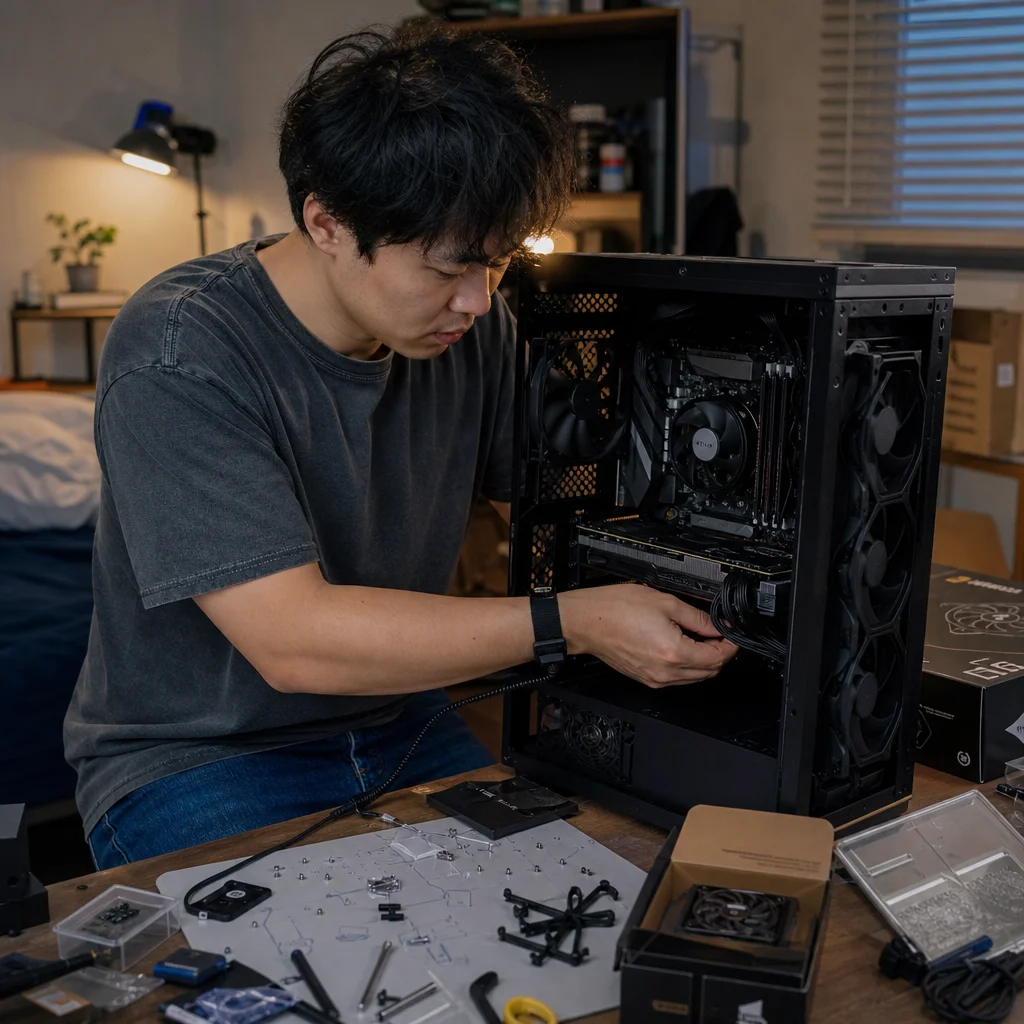
Reusing an older expansion card can save money, but physical installation is only the first test. A card may fit the motherboard and still lack a usable driver, fail modern security checks, or perform poorly enough to make the project frustrating.
The safest approach is to treat operating-system support as a chain of requirements. The card needs a suitable slot, a driver that works with your exact OS, firmware that initializes it correctly, and enough performance for the job you have in mind. If any link is missing, the hardware may be technically installable but not practically reusable.
Start with the exact card, not the product family
Identify the card precisely before checking support. Record the manufacturer, model number, revision, connector type, and—when available—the device ID printed on the card or shown in firmware. Product families often span several revisions, and a driver that supports one revision may not support another.
Look for the original model number on the circuit board, the bracket label, the box, or an old purchase record. If the card is already installed, your current operating system may identify it in Device Manager, System Information, lspci, or a similar hardware-information tool. The operating system's description is useful, but it isn't always specific enough to distinguish closely related models.
Also identify what the card actually does. A network adapter, storage controller, sound card, capture card, and graphics card can have very different support requirements. Some rely almost entirely on a standard operating-system driver, while others need vendor software, firmware utilities, or a particular application to function properly.
Separate physical fit from operating-system support
A card that fits a PCI Express slot isn't automatically supported by your operating system. The slot determines whether the card can connect electrically; the driver determines whether the operating system knows how to use it. Those are separate questions.
Check the card's interface and the motherboard's available slots first. Many PCI Express cards can operate in a physically longer slot, and newer PCI Express generations are generally designed to negotiate with older devices. However, that doesn't guarantee that every motherboard firmware, bridge chip, or operating system combination will initialize the card successfully.
Older cards using PCI or AGP are a different case. A modern motherboard may have no compatible slot at all, and passive adapters generally can't turn one bus standard into another. Even where an adapter exists, it may not provide the electrical or firmware behavior the card expects.
Power is another physical concern. Some cards require an auxiliary connector or a particular power capacity. A card that appears in the operating system but behaves erratically under load may have a power, cooling, or motherboard configuration problem rather than a driver problem.
Check driver support for the exact operating system
Find the manufacturer's support page for the exact model and compare its listed operating systems with the version you plan to run. “Windows support” or “Linux support” is too vague to be useful. Look for the specific release, architecture, and driver version, especially if you are using a recently released operating system or a long-term-support distribution.
A vendor's final driver may still work on a newer operating system, but compatibility isn't guaranteed. Conversely, an operating system may include a basic driver even when the manufacturer no longer publishes one. That built-in driver might be sufficient for ordinary networking or display output, yet omit advanced features, hardware encoding, monitoring, or configuration tools.
For Linux, check both the distribution's documentation and the kernel support for the card's chipset. A driver can exist in the kernel while firmware files, optional packages, or a non-default module are still required. Distribution release notes and hardware databases can reveal problems that a manufacturer's old support page doesn't mention.
For Windows, check whether the driver is intended for the installed Windows release and whether it is digitally signed. Older drivers sometimes install only through workarounds, and a successful installation doesn't prove that sleep, hot-plugging, hardware acceleration, or all device functions will work.
If the card is used with a specialized application, check that application's supported hardware list as well. A capture card may have an operating-system driver but no compatibility with the recording software you need. A storage controller may appear in the system but lack support in an installer or recovery environment.
Verify your exact software combination: Before buying or designing around the card, confirm the manufacturer, model revision, operating-system release, system architecture, and required application against current support pages and community documentation. Support status can change with new OS releases, discontinued downloads, or security-policy updates.
Look for security and signing requirements
Modern operating systems increasingly reject old or untrusted drivers. This is especially important for cards that need a kernel-level driver, such as some storage controllers, network adapters, graphics cards, and specialized interface hardware.
Check whether the driver is digitally signed and whether it supports the security features enabled on the planned system. Depending on the platform, Secure Boot, driver-signing enforcement, kernel lockdown, or virtualization-based security may prevent an old driver from loading. Disabling those protections can sometimes make an old card usable, but it reduces the system's security and may interfere with future updates.
Don't make security exceptions the foundation of a budget build unless you understand the consequences and have a clear reason to accept them. A cheap card can become expensive if keeping it operational requires an unsupported operating system, permanent security compromises, or a complicated boot process.
Firmware can create a similar obstacle. The card may have its own firmware, option ROM, or update utility, while the motherboard has firmware settings that affect initialization. Older option ROMs may not work cleanly with modern boot modes, and some devices need a firmware update before they can operate reliably with newer platforms.
Estimate performance instead of stopping at “works”
Operating-system support only answers whether the card can function. It doesn't tell you whether it is still a sensible choice.
Consider the task's actual requirements. An older network card may be perfectly adequate for a basic internet connection but unable to deliver the speed your local network supports. An older storage controller may work while limiting solid-state storage or adding latency. A graphics card might display a desktop but lack current video codecs, application support, or enough performance for the intended games and creative software.
Watch for features that depend on newer drivers rather than the hardware alone. Hardware acceleration, video encoding, power management, multi-monitor support, error reporting, and virtualization can disappear when a system falls back to a generic driver. Check independent testing or user reports for the workload you care about, not just a benchmark from the card's original release period.
Resource conflicts are less common on modern systems than they once were, but they can still appear with unusual hardware, adapters, or old firmware. Check available PCI Express lanes, shared slots, interrupt behavior, bandwidth limits, and motherboard documentation when the card will be used alongside several high-speed devices.
Use a staged test before committing the build
The most reliable way to reduce risk is to test the card outside the final build if you can. You don't need to install every component or configure the whole system. A temporary test system with a compatible slot, a spare drive, and a current operating-system installer can answer the important questions before the card becomes a dependency.
Begin with the simplest supported setup. Install the operating system with the card present, then check whether it appears correctly in the system's hardware information. Install the appropriate driver from a trusted source, restart, and test the card's main function. Look for error codes, missing features, repeated disconnects, excessive temperatures, and warning messages in system logs.
Test more than a brief successful boot. Transfer data through a network adapter, capture a sustained video stream, access storage under load, or run the intended application for long enough to expose instability. Test restart and shutdown as well as a cold boot. If the card is expected to survive sleep or hibernation, test those states too.
Keep a fallback plan. Have the operating system installer, a known-good network connection or adapter, current drivers, and a way to remove the card if it prevents normal startup. A spare modern card may cost less than the time spent recovering an installation that depends on an obsolete driver.
Recover when the card doesn't work
If the system fails to detect the card, shut down and check the physical installation first. Reseat the card, inspect the connector for damage, verify auxiliary power, and try another compatible slot if the motherboard provides one. Check firmware settings related to PCI Express, legacy option ROMs, or resource allocation, but change one setting at a time so you can identify what helped.
If the card appears with an error, remove old driver packages before installing a clean, appropriate version. Avoid driver-download sites that bundle unrelated software or obscure the source of the package. The manufacturer's archive, your operating-system repository, or a well-documented distribution package is usually easier to audit and reinstall.
A generic driver can be a useful diagnostic step. If basic functionality works with it, the hardware and slot may be sound while advanced features remain unavailable. If the system becomes unstable only after the vendor driver is installed, that points toward a driver or security-policy conflict rather than a dead card.
When a driver can't load because of signing or security requirements, first look for a supported driver or firmware update. If neither exists, compare the cost and risk of replacing the card with the cost of maintaining an isolated older system. Running outdated software or weakening security on an everyday computer is rarely a good bargain simply because the hardware was free.
Decide whether reuse is worthwhile
Reuse the card when its driver is supported by your intended operating system, its required features are available, and testing shows stable performance for the workload. This is particularly sensible for simple devices with mature in-box support, provided the card doesn't impose a meaningful speed, power, or reliability penalty.
Replace it when support depends on unofficial workarounds, the vendor has abandoned essential functionality, security protections must be disabled, or the card is too slow for the rest of the system. Replacement is also the better choice when a newer low-cost card offers current drivers, lower power use, and a simpler recovery path.
Before final assembly, write down the card's exact identity, driver source, firmware version, and the operating-system release that passed testing. Keep a backup copy of any necessary driver that is legally available for download, along with the motherboard and card manuals. That small amount of preparation can make a future reinstall much less painful.
The goal isn't to reject every old component. It is to distinguish a genuinely useful bargain from hardware that only appears compatible. Check the exact device, confirm current software and security support, test the features you need, and keep an uncomplicated fallback. If the card passes those checks, reusing it can be a sensible way to reduce the cost of a dependable build.